Address
304 North Cardinal
St. Dorchester Center, MA 02124
Work Hours
Monday to Friday: 7AM - 7PM
Weekend: 10AM - 5PM
Address
304 North Cardinal
St. Dorchester Center, MA 02124
Work Hours
Monday to Friday: 7AM - 7PM
Weekend: 10AM - 5PM
After reporting a claim to your insurance provider, you can expect a claims adjuster to reach out within 24 to 48 hours. This initial contact is crucial as it sets the stage for the entire claims process.
The insurance company typically has about 30 days to investigate your auto insurance claim, although this timeframe may vary by state due to different insurance regulations.
Understanding the timeframes within which adjusters typically contact claimants is essential for a smooth claims process. Various factors, including claim type and severity, can influence how quickly an adjuster reaches out.
Adjusters are the backbone of the insurance industry, tasked with investigating claims and ensuring that settlements are fair and in line with policy terms. Their role is multifaceted, involving the assessment of damage, review of policy details, and negotiation with claimants.
Insurance adjusters are responsible for a range of tasks, including investigating the circumstances surrounding a claim, assessing the extent of damage, and determining the appropriate compensation. They must interview claimants and witnesses, review relevant documentation, and apply their knowledge of insurance policies to reach a fair settlement.
There are several types of adjusters working within the insurance industry, including company adjusters employed directly by insurance companies, independent adjusters who work on a contract basis, and public adjusters who represent policyholders. Each type of adjuster has a distinct role and approach to handling claims.
When you file an insurance claim, the waiting game begins, but how long should you wait for an adjuster to contact you? Generally, an insurance adjuster is expected to reach out within 24 to 48 hours after you’ve reported an incident to your insurance company.
The initial contact timeframe can vary depending on the type of claim and the complexity of the case. Most state laws require insurance companies to process claims promptly. While 24 to 48 hours is the standard for initial contact, the full investigation process can take up to 30 days or longer.
It’s essential to note that response times can differ significantly across various jurisdictions due to different state laws. Some states have specific regulations regarding the timeframe within which an adjuster must contact a claimant. For instance, certain states mandate that insurance companies make initial contact within days of receiving a claim.
| State | Initial Contact Timeframe | Full Investigation Timeframe |
|---|---|---|
| California | 24-48 hours | Up to 30 days |
| New York | 24 hours | Up to 45 days |
| Texas | 48 hours | Up to 60 days |
“Insurance companies are required to handle claims in good faith, which means they must investigate and process claims promptly and fairly.”
The time it takes for an adjuster to contact you can be influenced by several factors, including the severity of the claim and the specific requirements of the insurance company. Understanding these factors can help you navigate the claims process more effectively.
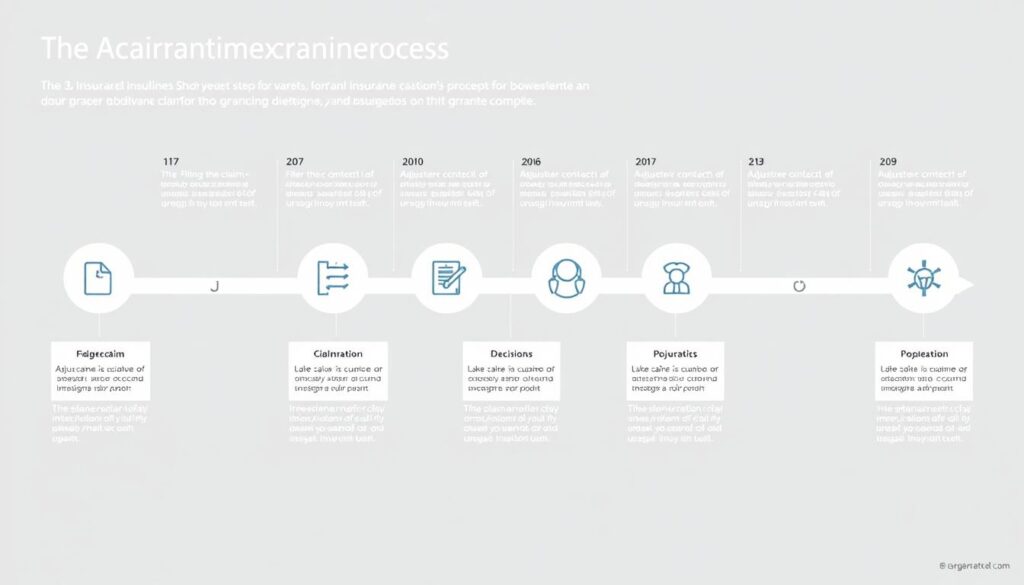
The insurance claims process is a complex series of events that can be broken down into distinct stages. Understanding these stages is crucial for policyholders to manage their expectations and navigate the system effectively.
Filing an insurance claim is the first step in the process. Policyholders can file a claim through various channels, such as using a mobile app, logging into their account online, or by calling the insurance company’s customer service number. For instance, filing a claim with Progressive can be done by using their mobile app, going online, or by calling 1-800-776-4737. It’s essential to provide detailed information and required documentation to facilitate a smooth process.
Upon receipt of a demand letter or claim, the insurance company assigns an adjuster to handle the case. The adjuster is responsible for evaluating the claim and determining the extent of the company’s liability. The assignment of an adjuster is a critical step, as it sets the stage for the investigation and subsequent actions.
The investigation period is a critical phase of the claims process, during which the adjuster gathers evidence and assesses damages. This period can vary significantly depending on the complexity of the claim, ranging from a few days for simple cases to several weeks or months for more complex ones. The adjuster may conduct property inspections, medical evaluations, and gather witness statements to evaluate the claim thoroughly.
| Stage | Description | Typical Timeframe |
|---|---|---|
| Filing Your Claim | Submitting the initial claim with required documentation | 1-3 days |
| Adjuster Assignment | Insurance company assigns an adjuster to the case | 1-7 days |
| Investigation Period | Adjuster investigates the claim, gathering evidence and assessing damages | Several days to several weeks or months |
Several key factors determine the response time of an insurance adjuster after a claim is submitted. Understanding these factors can help claimants better navigate the insurance claims process.
The severity and complexity of a claim significantly impact the adjuster’s response time. Claims related to minor incidents, such as small damages or repairs, might receive quicker responses. However, complex claims requiring additional resources and expertise may take longer to process.
During natural disasters or catastrophic events, insurance companies often face a high volume of claims, which can lead to delays in adjuster response times. Seasonal factors, such as hurricane season, can also create industry-wide delays.
The size and resources of an insurance company can influence their ability to respond quickly to claims. Larger companies with more advanced technology and staffing may handle claims more efficiently than smaller ones.
| Factor | Impact on Response Time | Example |
|---|---|---|
| Claim Severity | Complex claims take longer | Major structural damage vs. minor repairs |
| Disaster Situations | High volume causes delays | Hurricane or wildfire events |
| Company Resources | Bigger companies respond faster | Advanced technology and staffing |

Understanding the legal obligations of insurance companies is crucial for policyholders navigating the claims process. Insurance companies operate under a framework of state laws and regulations that dictate how claims should be handled.
Most state laws require insurance companies to process claims promptly and without unnecessary delays. Some states have specific requirements for insurers to provide written explanations if a claim is taking longer than 30 days to process. The variability in state laws means that response times can differ significantly from one jurisdiction to another.
| State | Required Response Time | Additional Requirements |
|---|---|---|
| California | 15 days | Written explanation for delays |
| New York | 30 days | Notification of claim status |
| Florida | 20 days | Update on claim investigation |
Insurance companies have a legal obligation to acknowledge, investigate, and respond to claims within specific timeframes. Failure to comply with these obligations can result in penalties and potential bad faith claims. Policyholders who experience unreasonable delays can file complaints with their state’s insurance department.
Understanding what to expect during the initial contact with an insurance adjuster can make a difference in your claim’s progression. This first interaction is crucial as it sets the tone for the entire insurance claim process.
During the initial contact, the adjuster will typically request detailed information about the incident, including the date, time, and circumstances surrounding the event. They will also review your insurance policy to determine the coverage and any applicable deductibles.
If necessary, the adjuster may schedule an in-person inspection to assess the damages. It’s essential to be prepared for this visit by documenting the damages and having relevant details ready. This step is a critical part of the claim process with the insurance company.

To make the most of your insurance adjuster’s visit, thorough preparation is key. When filing an insurance claim, it’s crucial to be ready to provide the necessary information to facilitate a smooth process.
Before the adjuster arrives, documenting your damages is essential. Take detailed photographs and videos of the damage from multiple angles. Create an inventory of damaged items, gathering receipts, warranty information, and proof of value where possible. This documentation will help the adjuster assess the extent of the damage and expedite the claims process.
Organize all relevant information related to your claim, including your insurance policy, incident reports, medical records, and correspondence. Having this information readily available will enable the adjuster to process your claim efficiently. Make sure to have repair estimates or professional opinions ready to share with the adjuster during their visit to help get a more favorable settlement.
Claimants may encounter substantial delays in hearing back from insurance adjusters, causing uncertainty about the status of their claim. Delays can occur due to various factors, some of which are legitimate while others might be more concerning.
Legitimate delays can result from high volumes of claims following natural disasters, staff shortages within the insurance company, or the need for specialized expertise in complex cases.
In some instances, delays might be intentional, used as a tactic by the insurance company to prolong the claims process. This can be a form of bad faith practices, where the insurer unreasonably delays processing a claim.
Claimants have the right to a timely response from their insurance provider. Understanding state-specific timeframe requirements and knowing the proper escalation procedures within the company can help claimants navigate these delays effectively.

The insurance claims process can be streamlined by adopting effective communication techniques and providing comprehensive documentation. By understanding the steps involved and taking proactive measures, claimants can significantly reduce the time it takes to resolve their insurance claims.
Effective communication is crucial in expediting the insurance claims process. Regular follow-ups with adjusters and maintaining detailed records of all interactions can help prevent unnecessary delays. Claimants should ensure that they are responsive to requests from adjusters and keep a record of all correspondence.
Submitting complete and organized documentation upfront is vital in preventing back-and-forth requests that delay claim processing. This includes providing detailed descriptions of the damage, supporting evidence, and any other relevant information required by the insurance company. Ensuring that all necessary documents are submitted at the outset can significantly speed up the claims process.
Insurance agents can play a pivotal role in facilitating the claims process. They can serve as advocates and intermediaries between the claimant and the insurance company, often helping to move claims along more efficiently. By working closely with their insurance agent, claimants can gain a better understanding of the requirements and expectations of their insurance company, thereby expediting the process.
| Strategy | Description | Benefit |
|---|---|---|
| Proactive Communication | Regular follow-ups with adjusters and detailed record-keeping. | Prevents unnecessary delays. |
| Complete Documentation | Submitting all necessary documents at the outset. | Reduces back-and-forth requests. |
| Collaboration with Insurance Agent | Working closely with the insurance agent to understand requirements. | Facilitates a smoother claims process. |
Knowing when to involve an attorney in the insurance claims process can significantly impact the outcome of your case. Insurance adjusters are trained to minimize payouts, and their tactics can sometimes be misleading or unfair.
Bad faith practices by an insurance company can include unreasonable delays, lowball offers, and misrepresentation of policy terms. If you experience any of these issues, it may be time to seek legal representation. As one expert notes, “Insurance companies often use tactics designed to minimize payouts, leaving claimants with less than they deserve.”
An attorney specializing in personal injury and insurance claims can level the playing field. They bring expertise in policy interpretation, negotiation skills, and the ability to file lawsuits if necessary. By involving an attorney, you can protect your rights and potentially increase your claim compensation.
After the insurance adjuster makes initial contact, the claim process enters a critical phase that culminates in a settlement. This stage involves several key steps, including the evaluation of the claim, negotiation between parties, and finalizing the settlement amount.
The time it takes to reach a settlement varies significantly based on the type of claim. For insurance claims involving only property damage, settlements can be reached in as little as 7-8 days or up to more than 30 days once negotiations begin. In contrast, personal injury claims often take longer as the full extent of injuries and medical expenses is determined.
Several factors can influence the speed of the settlement process. These include the complexity of the case, the completeness of the documentation provided to the insurance company, and the negotiation strategies employed. The internal review processes and approval hierarchies within the insurance company also play a crucial role in determining the settlement timeframe and the final amount.
| Claim Type | Typical Settlement Timeframe | Factors Affecting Settlement |
|---|---|---|
| Property Damage | 7-30 days | Complexity of the case, documentation completeness |
| Personal Injury | Months or years | Extent of injuries, medical expenses, negotiation strategies |
Personal injury claims involve a complex process that differs significantly from other types of insurance claims. The process is influenced by several factors, including medical treatment timelines and the evaluation process for injury claims.
The process typically begins with a demand letter sent by a personal injury attorney on behalf of the claimant. This letter notifies the insurance company of a potential legal claim and requires a response within a reasonable timeframe, usually around 30 days.
Negotiating with liability insurance adjusters requires a strategic approach, as they often have different priorities compared to first-party insurance adjusters. Effective negotiation involves understanding the insurance company’s perspective while advocating for a fair settlement in the case.

Protecting yourself during the insurance claims process involves several key steps that can significantly impact the outcome of your claim. Maintaining open and frequent communication with the adjuster is crucial throughout this process.
One of the most critical aspects of protecting yourself is keeping detailed records of all claim-related communications. This includes documenting dates, times, names, and summaries of conversations with adjusters. It’s essential to be thorough and organized in your record-keeping to ensure that you have a clear and comprehensive history of your interactions.
Detailed records can help prevent misunderstandings and provide a clear paper trail in case of disputes. Make sure to keep receipts for all claim-related expenses, as these can be crucial in supporting your claim.
Understanding your insurance policy is vital to protecting your interests during the claims process. Familiarize yourself with your policy language, including coverage limits, exclusions, and claims procedures. Knowing your rights under your policy can help you navigate the claims process more effectively and ensure that you receive a fair settlement.
| Policy Component | Description | Importance |
|---|---|---|
| Coverage Limits | The maximum amount the insurance company will pay for a claim. | High |
| Exclusions | Specific situations or damages not covered by the policy. | High |
| Claims Procedures | The steps you must take to file a claim, as outlined in your policy. | High |
By understanding these components, you can better navigate the claims process and ensure that you’re taking the right steps to protect your interests. When reviewing settlement offers, make sure they address all covered damages before accepting.
When filing an insurance claim, it’s essential to know what to expect from the insurance adjuster and the overall claims process. Typically, claimants can expect an adjuster to make initial contact within 24-48 hours. However, various factors can affect this timeframe, including claim severity and disaster situations.
Understanding the insurance claims process and your rights as a policyholder is crucial. By being proactive—such as maintaining thorough documentation and engaging in regular communication—you can facilitate a smoother and faster claims experience. It’s also important to be aware of the legal protections in place, including state-specific regulations that ensure insurance companies handle claims fairly and promptly.
While most claims proceed without significant issues, knowing how to address potential delays or problems is vital. By balancing patience with appropriate follow-up, you can effectively navigate the insurance claims process.